
Volume XIV - October 2025
Firm Updates

Chief Legal Officer of Bridger Photonics
First and foremost, we’re writing to share a development in the McCurdy Laud story.
Catlan McCurdy has joined Bridger Photonics as their Chief Legal Officer, building on her role as Bridger’s General Counsel over the past year. This represents a natural evolution of the deep partnership between our companies and reflects the innovative approach to legal service that has always defined McCurdy Laud.
As Bridger pursues ambitious international expansion and revenue growth objectives, Catlan will work directly with their executive team to build systematic legal frameworks that eliminate operational friction and accelerate deal velocity. Her focus will include developing comprehensive policy structures, optimizing contract lifecycle management, and creating legal infrastructure to support both organic international growth and strategic acquisitions.
Beginning on November 1, 2025 and throughout Catlan’s employment at Bridger, she will be non-practicing for other clients while maintaining her role as administrative head of McCurdy Laud's transactional group. This structure allows her to contribute to Bridger's rapid scaling while ensuring McCurdy Laud continues delivering exceptional service to our broader client community.
Maxwell McCurdy, our Chief of Operations, continues leading client services and firm operations. Melissa Nelson, Attorney in our transactional group, will continue serving our clients at the level of professionalism they have come to expect, supervised by Sanjiv Laud. We're also actively recruiting an experienced principal attorney with deep transactional expertise to join our team. This strategic addition reflects our commitment to maintaining the personalized, technically sophisticated legal counsel our clients have come to expect.
The legal profession often talks about thinking outside traditional models, but rarely acts on it. This transition represents our commitment to innovative service delivery that prioritizes client outcomes over conventional practice structures.
We look forward to sharing updates on both Bridger's continued success and McCurdy Laud's evolution as we write this next chapter together.
Firm Spotlight
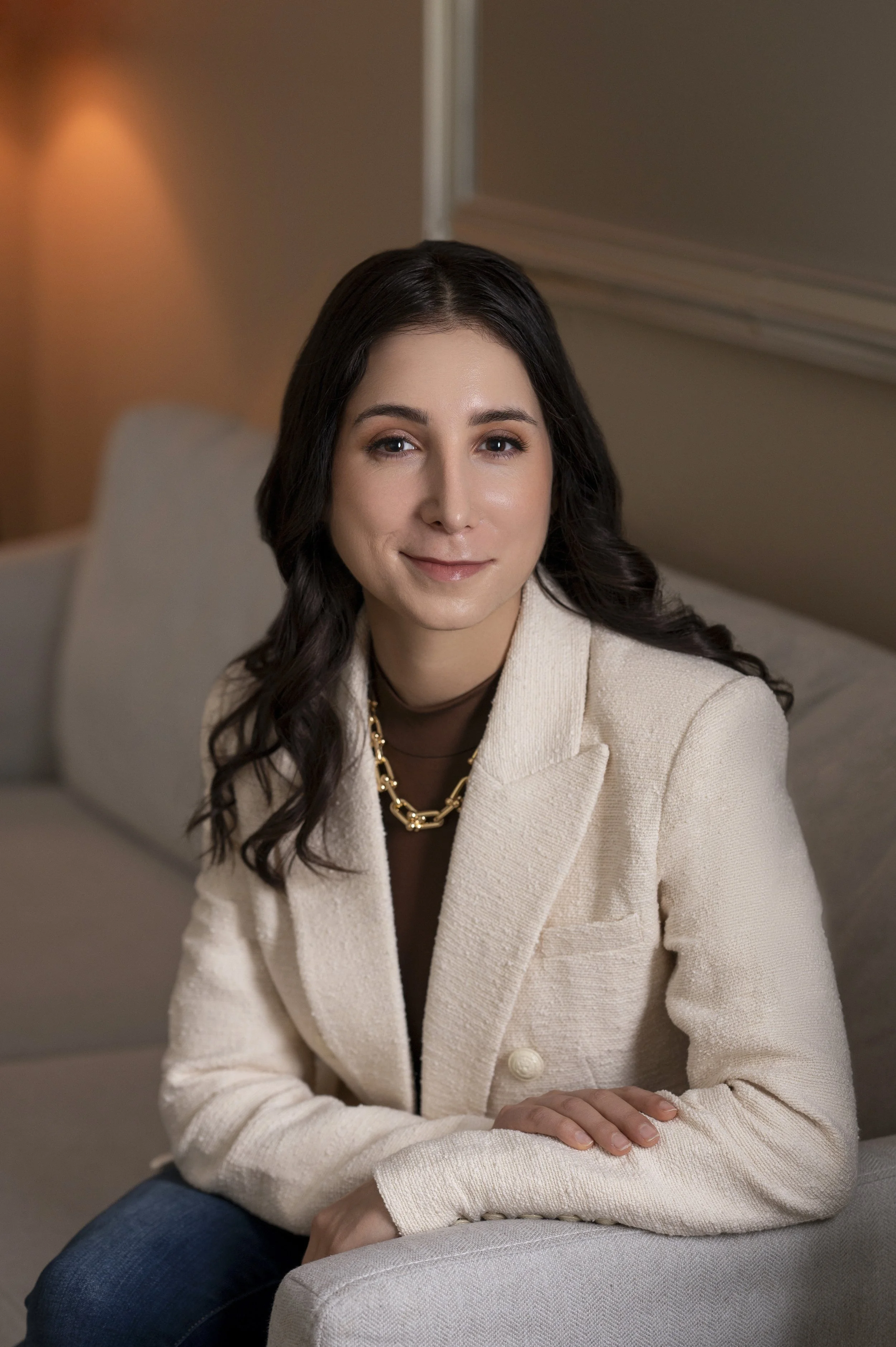
McCurdy Laud attorney, Melissa Nelson, recently traveled to Chicago, IL to attend the 2025 UIDP Chicago Conference. UIDP is an organization where representatives from top-tier innovation companies and world-class research universities meet and commit to active participation in pursuit of excellence in U-I collaboration and partnership. Melissa shares her experience below:
The UIDP Chicago Conference provided valuable insights into the evolving landscape of university-industry partnerships, particularly around innovative approaches to research collaboration and funding models. Across sessions ranging from subscription-based access to research assets to strategic partnerships with national laboratories, a common thread emerged: the shifting nature of how academic institutions and industry partners structure their relationships in an era of changing research funding, rising costs, compliance requirements, and talent development needs.
What resonated most deeply was the recurring challenge of creating mutually beneficial partnerships where both universities and industry feel they're achieving fair value. The session on "Exploring Subscription Models for Access to Research Assets and Technologies" was particularly enlightening, as it was clear there is not one solid method that has been adopted by either party. Hearing perspectives from both sides of the table—university technology transfer professionals articulating their institutional constraints and industry representatives explaining their budget and R&D priorities—illuminated why traditional transactional models sometimes fall short. The subscription model concept is intriguing because it potentially addresses a fundamental tension: universities need predictable, sustained funding to maintain research infrastructure and talent pipelines, while companies want flexible, ongoing access to capabilities without negotiating individual agreements for every project. Understanding how pioneering institutions are implementing these arrangements, including pricing structures, scope definition, and success metrics, provided concrete examples of innovation in partnership design.
The session on national laboratory partnerships and the practical discussion of Basic Ordering Agreements offered complementary perspectives on how to optimize research infrastructure and streamline collaboration mechanics. I particularly enjoyed CNH's presentation on their research and workforce vision that brought these themes together, demonstrating how a major corporation thinks strategically about building an innovation ecosystem that spans multiple partnership types. For our clients navigating complex technology development challenges, these insights are directly applicable. Many companies we work with are reassessing their R&D strategies and partnership portfolios, seeking more efficient ways to access specialized capabilities while managing costs and intellectual property considerations. Understanding emerging models like subscription access, the practical realities of government lab collaborations, and how leading companies structure their university relationships equips us to provide more informed guidance as our clients build their own innovation networks in an increasingly collaborative research landscape.
Current Developments
The United States Patent and Trademark Office
This quarter has been a busy one for developments in U.S. intellectual property law, with a number of major rulings and settlements in generative AI litigation any one of which could fill this column. But this issue, we’re breaking with tradition to focus on important developments outside the courts: the shifting landscape at the United States Patent and Trademark Office.
The America Invents Act, passed in 2011, created a new system allowing anyone to challenge the validity of an issued patent in litigation-like proceedings before a tribunal of specialist Patent Office judges. The most common of these proceedings is inter partes review (IPR). The existence of these focused and relatively fast proceedings to challenge a patent dramatically shifted the stakes in favor of defendants (accused infringers) in patent litigation. The USPTO, now led by Director John Squires, has taken several steps to reverse that shift by exercising the Director’s statutory discretion to decline to institute an IPR proceeding even when the challenger has a reasonable likelihood of prevailing.
First, the USPTO rescinded the Fintiv memorandum setting forth the criteria that the Patent Trial and Appeal Board, acting for the Director, would use to decide whether to deny institution of an IPR based on discretionary considerations. Second, in over 300 institution decisions, the USPTO has relied on a new consideration to deny review: the patent owner’s “settled expectations” that the patent would not be challenged when the patent is more than a few years old. Third, and perhaps most importantly, the USPTO proposed new rules that would significantly expand the situations in which the USPTO denies institution.
Multiple mandamus petitions are now pending before the Federal Circuit, with companies including SAP, Motorola Solutions, Google, Samsung, SanDisk, and Cambridge Industries challenging the USPTO's expanded discretionary denial framework. Petitioners argue that the policy changes—particularly the retroactive application of the "settled expectations" rule and rescission of the Fintiv memo—violate the Administrative Procedure Act and the Fifth Amendment right to due process. Notably, former USPTO Director Kathi Vidal filed an amicus brief supporting Cambridge Industries' mandamus petition, arguing that the settled expectations doctrine was improperly adopted and could have prevented the USPTO from invalidating patents later found to be unpatentable—such as in the VLSI v. Intel case, where the USPTO invalidated patents after a $2.18 billion jury verdict. The Federal Circuit has requested responses from the USPTO in all five pending mandamus cases, a step that signals judicial interest in examining the boundaries of the Director's discretionary authority.
Upcoming Events
10/01 | First Night of Yom Kippur
10/13 | Indigenous People’s Day (Office Closed)
10/20 | Diwali
10/31 | Halloween
11/01 | First Day of American Indian Heritage Month
11/04 | Election Day
11/11 | Veteran’s Day (Office Closed)
11/27 | Thanksgiving (Office Closed)
12/14 | First Night of Hanukkah
12/25 | Christmas (Office Closed)
12/26 | Kwanzaa Begins
12/31 | New Year’s Eve
01/01 | New Year’s Day
Note from Catlan

In 2006, a group of scientists in Bozeman, Montana started building precision laser measurement systems—LiDAR technology capable of detecting methane leaking from pipelines, wells, and infrastructure we can't see. Pete Roos, Mike Thorpe, and Jay Brasseur weren't just building a company—they were pioneering a technology that would eventually detect emissions invisible to conventional methods, creating a tool that can actually bend the curve on climate change.
I've supported Bridger Photonics since 2017, including as its General Counsel for the past year, working alongside this founding team and newer executive leadership who share their vision. The deeper I got into Bridger's operations—the strategic decisions, the technical challenges, the daily problem-solving that drives a scaling company—the more I found myself captivated by the culture, the people, and the mission itself.
So, I'm making a change that might seem unconventional for a law firm founder: I'm joining Bridger full-time as their Chief Legal Officer.
I'll embed directly in Bridger's operations, working with the rest of the executive team as the company scales internationally and pursues aggressive growth targets. This means I'll be non-practicing for other clients beginning November 1, 2025—a structure that lets me contribute the kind of systematic legal infrastructure Bridger needs while maintaining my role as administrative head of McCurdy Laud's transactional group.
The legal profession talks endlessly about being business partners, not just service providers. But actual partnership sometimes requires stepping beyond traditional engagement models. When a client's growth trajectory demands legal thinking that's integrated rather than consultative, the most effective response might be to embed yourself in their story rather than commenting on it from the sidelines.
McCurdy Laud isn't going anywhere. If anything, this transition reflects the firm's founding principle: that effective legal counsel sometimes requires thinking beyond conventional practice structures. We've always believed that lawyers should meet clients where they actually need us, even when that means reimagining what legal service looks like.
Maxwell McCurdy continues leading our client services and firm operations with the same meticulous attention he's brought since we started. Melissa Nelson, supervised by Sanjiv Laud, will continue serving our transactional clients at the level they've come to expect. And we're actively recruiting an experienced principal attorney to join our transactional team—someone who shares our commitment to technically sophisticated counsel delivered without the pretense that too often accompanies it.
I'm grateful to everyone who helped build McCurdy Laud into what it is today—our clients who trusted us with their most complex challenges, our team members who consistently exceed every expectation, and our professional network who understood that a small firm could deliver work that rivals anyone's.
This isn't goodbye, just a different configuration of how I practice law. I'll still be thinking about contract structures and IP strategies and the thousand small decisions that determine whether legal frameworks enable growth or constrain it. I'll just be doing it while watching Bridger's technology map methane emissions across continents, working directly with the people building systems that might actually matter.
If you're working on something ambitious—particularly in university-industry collaborations, sponsored research, or technology commercialization—the McCurdy Laud team remains ready to help. Reach out to Maxwell (maxwell@mccurdylaud.com) or Sanjiv (sanjiv@mccurdylaud.com) to continue the conversation.
And if you're curious about what legal work looks like when it's fully integrated with a company's growth trajectory rather than adjacent to it, well—I'm about to find out. I'll let you know how it goes.